Togetherfor a sustainablesolution

The Waste Management Coalition (WMC) is a group of civil society organizations, independent experts and environmental activists in Lebanon, working together for integrated, sustainable waste management that protects people’s health and the environment – without incinerators.

Waste Management Coalition

Why the coalition exists

WMC was founded in 2017 because Lebanon lacks a vision and strategy for sustainable waste management, and authorities have repeatedly failed to find comprehensive, environmentally sound solutions.

Since the early 1990s, the country has relied on temporary and emergency plans that serve the interests of a few. Waste is landfilled without sorting or treatment, dumped on the coast, near the international airport and in residential areas, or burned in open dumpsites – without monitoring or accountability.

Today, national and local authorities are again proposing incineration under the name of “thermal degradation”, even though incinerators are unsuited to local conditions. Incineration is the most harmful and most expensive option for municipal solid waste.

Our vision

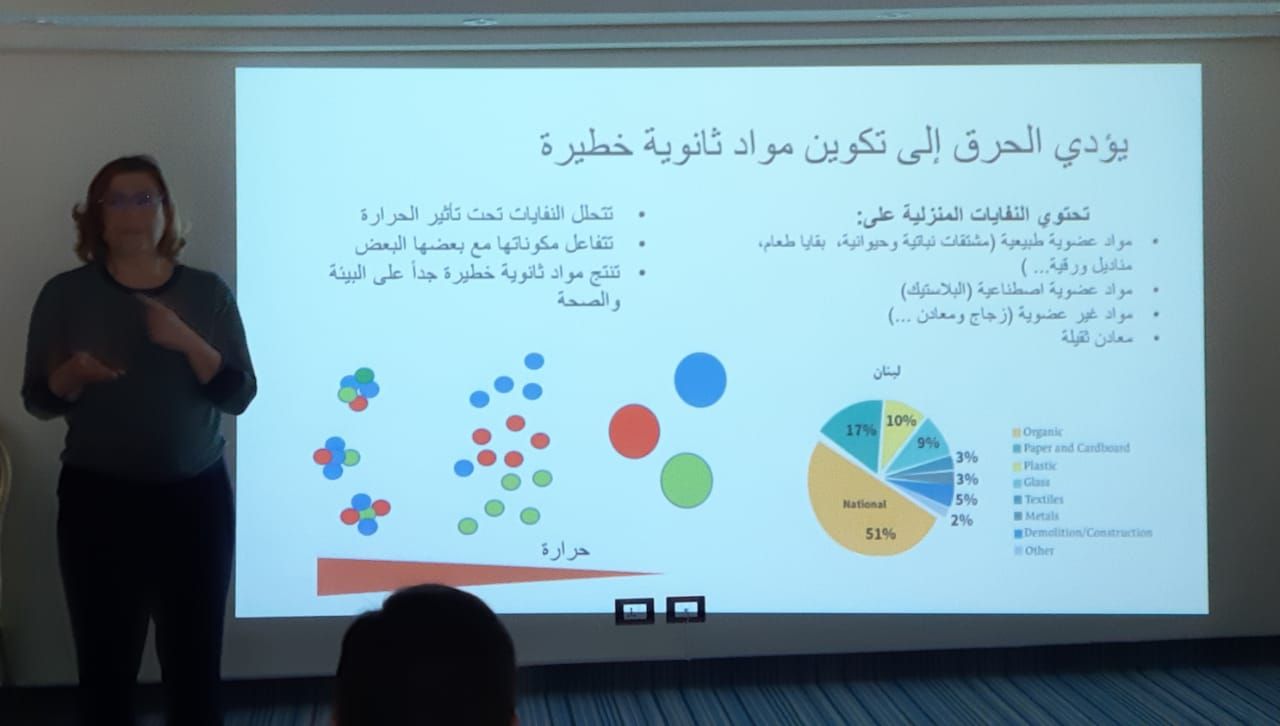
More than 80% of Lebanon’s waste can be treated without incinerators

Treatable by composting, anaerobic digestion and recycling

  • Organic materialTurned into compost, or into biogas for energy through anaerobic digestion
  • Paper, cardboard, metal, plastic, glassSorted at source, collected separately, then reused and recycled
  • ResidualTreated with techniques suited to local conditions

Our vision is a country that follows integrated solid waste management strategies and plans protecting the environment, human health and resources, guided by a circular economy and sustainable consumption: less waste, less hazardous waste, more reuse and recycling, and environmentally sound, economically feasible solutions for what remains.

Mechanical and biological treatment, which relies on sorting and recycling, has already been used in Lebanon with promising results and limited impact on people and the environment. Incineration is the most harmful, costly and complex option, especially without the legal and institutional frameworks needed to monitor it.

How we assess any proposed solution

Environmental impact
Limited harm to the environment
Health impact
Lowest possible risk to public health
Social impact
Understood and accepted by the communities affected
Land use
Needs as little land as possible
Financial feasibility
Low investment and running costs, with potential returns
Technical complexity
Simple and adaptable technology
Local expertise
The skills needed are available in Lebanon
Institutional complexity
No major legislative or administrative overhaul required

Our goals

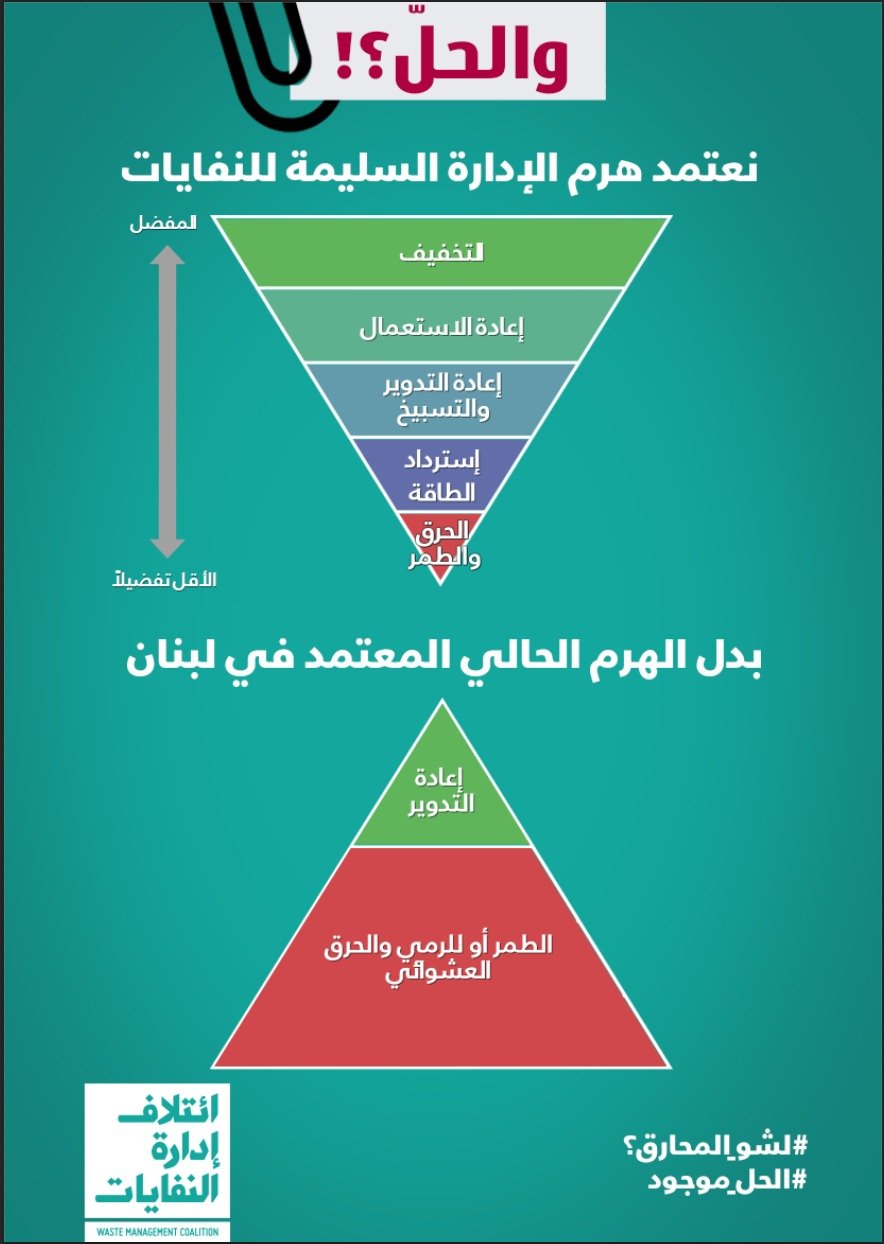
Pressure the authorities in charge of solid waste management in Lebanon to adopt and apply an integrated, sustainable strategy with clear action plans – starting with waste reduction, reuse and recycling, then material and energy recovery, and only then other disposal techniques suited to local conditions, always meeting national and international environmental standards.

  1. ReduceMost preferred
  2. Reuse
  3. Recycle and compost
  4. Energy recovery (biogas)
  5. DisposalLast resort
The waste management hierarchy

Technical

  • Stop plans to use incinerators for municipal waste in Lebanon.
  • Push for a strategy that reduces waste, enforces sorting at source and expands recycling.
  • End open burning, dumping and landfilling without treatment, particularly at the Costa Brava and Bourj Hammoud landfills.

Legislative

  • Make authorities respect international environmental conventions and penalize violations.
  • Pass sustainable waste management laws, with economic incentives that cut waste and raise recycling rates.

Administrative

  • Return responsibility for waste management to the Ministry of Environment, to set integrated policy and mid- and long-term plans and monitor their implementation through a participatory approach.

Community

  • Spread the culture of prevention, reduction, reuse and recycling through education and awareness campaigns.
The principles the coalition follows
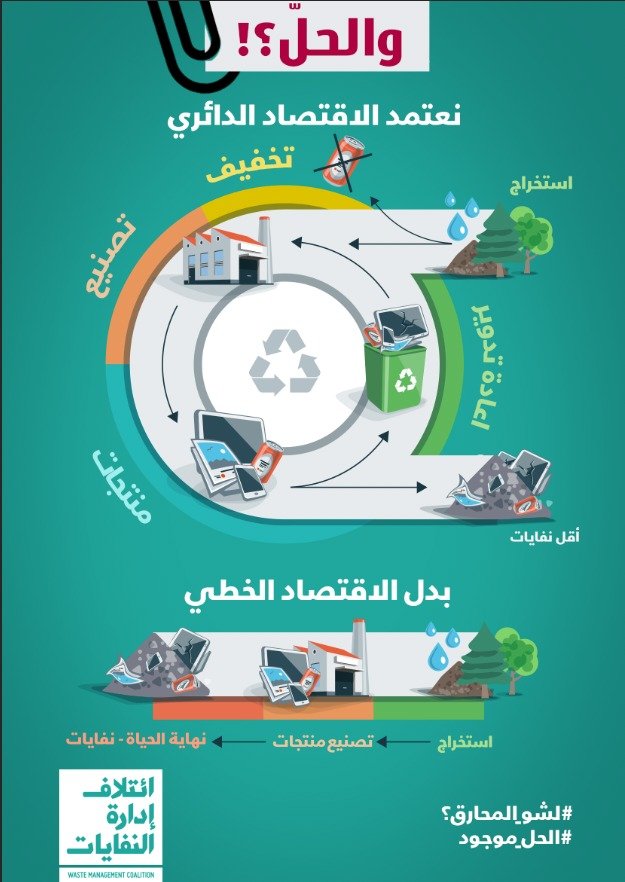
  • Waste generation should be reduced, and economies should move from a linear to a circular model.
  • Valuing and recovering materials from municipal, commercial and industrial waste is the preferred option.
  • Recycling creates green jobs and stimulates the local economy.
  • Recycling is a shared responsibility of manufacturers, suppliers, distributors, consumers and all levels of government.
  • Government policy and legislation should include incentives to limit waste, use recycled material, adopt modern recycling techniques and build the necessary infrastructure.
  • Local authorities need the powers, assets and infrastructure to treat waste.
  • Providing sustainable solutions is the responsibility of the executive and legislative authorities, which hold the human and financial resources to plan and deliver them.
  • Central government, with local authorities, should develop the integrated strategy, set monitoring standards and coordinate projects; municipalities and unions of municipalities handle operations.
  • Waste projects must respect Lebanese law and national and international environmental conventions, with transparent management in the public interest.
  • The principles of Environmental Protection Law No. 444/2002 – precaution, prevention, avoiding degradation of natural resources – must be applied.

Campaigns

For municipalities

Where there’s a will, there’s a way

Municipalities and neighbourhoods across Lebanon have shown that sorting at source and local treatment work. Contact us and we’ll connect you with the people behind them:

  • Khirbet SelmWaste management project – Dr. Ibrahim Houeily
  • Beit MeriZero Waste project – Eng. Ziad Abi Chaker
  • Arab SalimSorting at source – Dr. Zeinab Moukalled, Nidaa al-Ard
  • Deir Al ZahraniWaste sorting – Kassem Toufaily, municipal environment committee
  • Zukak al-Blat, BeirutNeighbourhood project – Eng. Nahida Khalil, Beirut Madinati
  • Bikfaya
  • Douar

4 August 2020

Hazardous waste from the Beirut port explosion

As volunteers and organizations cleared rubble from damaged buildings after the explosion, the coalition warned that some of the debris contained asbestos.

Asbestos can be found in older buildings in insulation, tiles, pipes and corrugated roofing. Its fibres are dangerous to breathe, so the material must be handled with great care.

The coalition proposed a mechanism for managing asbestos-containing waste, and on 18 August 2020 went to the urgent-matters judge to stop the mismanagement of explosion waste.

The #TheSolutionExists campaign

Awareness posters from our campaign against incineration (in Arabic). Select a poster to see it full size.

The waste hierarchy we call for, versus Lebanon’s reality
A circular economy instead of a linear one
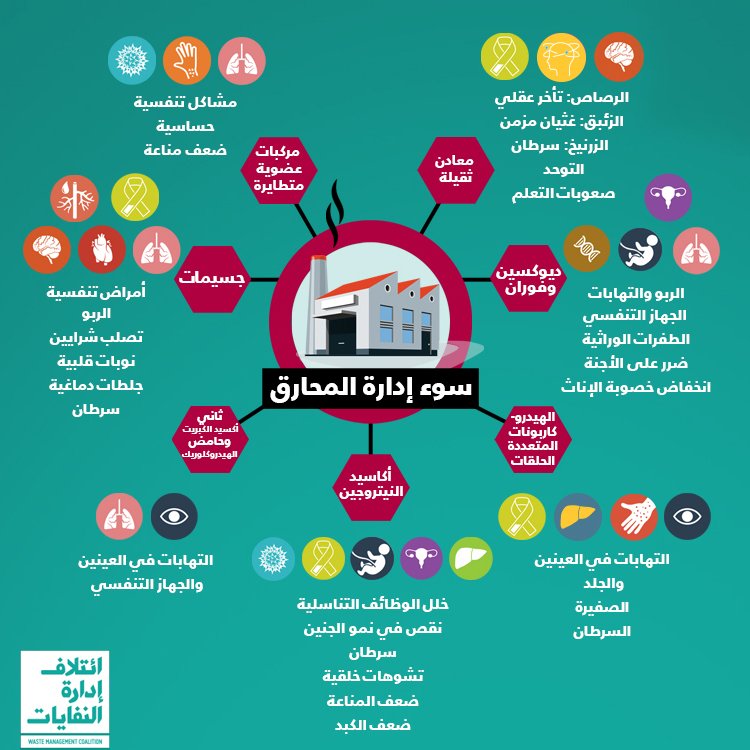
Poorly run incinerators: the pollutants and their health effects

Our positions

The coalition reviews draft laws, decrees and policies on waste, and speaks out publicly for sound waste management. All documents are in Arabic.

Resources and references

Laws, policies and studies we rely on in our work.

Lebanese policy and law

Health and human rights

International guidance

Studies of the coalition’s work

Members

  • Operation Big Blue Association
  • Beirut Madinati
  • Cedar Environmental
  • Arab Youth Climate Movement
  • Green Area
  • Diaries of the Ocean
  • FrozChreek
  • Nidaa al-Ard
  • Environmentalists’ Gathering
  • Choueifat Madinatouna
  • Insan Forum
  • Popular Observatory to Fight Corruption
  • You Stink (Tol3et Rihetkom)
  • Our Children’s Health Is a Red Line

Join us

I would like to join the Waste Management Coalition and support it in pressing the relevant authorities to develop and implement a comprehensive, sustainable and environmentally sound waste management plan for Lebanon, in line with the coalition’s principles and goals.

Organizations, groups and individuals are welcome. Send us your name or your group’s name and how you’d like to contribute.

Contact: wmcoalition@gmail.com